What if a child can score excellent marks but struggles to solve a problem, work with others, make a decision, or handle an unfamiliar situation independently?
This question changes the way we think about the importance of education.
Education is not simply about completing a syllabus, memorising information, or preparing for examinations. It is about helping children understand the world, discover their strengths, develop curiosity, and build the confidence to participate meaningfully in it.
A classroom provides an essential foundation for learning. But some of the most valuable lessons happen when students step beyond traditional learning spaces to create, explore, experiment, collaborate, question, and solve real-world problems.
For parents exploring schools in Bangalore, this broader approach to education is becoming increasingly relevant. Families are looking for learning environments that combine academic foundations with creativity, practical skills, wellbeing, and opportunities to apply knowledge beyond textbooks.
Education and Learning: What Is the Difference?
Education often refers to the structured process of gaining knowledge through a curriculum. Learning, however, is much broader.
A student may learn about sustainability in a science lesson, but understanding sustainability becomes more meaningful when they explore how waste can be reduced or reused. They may study mathematics in class, but planning resources for a project can demonstrate how mathematical thinking works in everyday life.
Learning can happen through a project, conversation, experiment, field experience, community interaction, or even a mistake.
This is why learning beyond the classroom matters. It gives students opportunities to apply concepts rather than simply remember them. Experiences outside conventional classroom settings can also encourage collaboration, leadership, critical thinking, decision-making, and problem-solving.
Why the Importance of Education Goes Beyond Academic Marks
Academic knowledge remains fundamental. Children need strong foundations in mathematics, science, languages, social sciences, and other subjects. However, academic achievement is only one part of preparing a child for the future.
The world beyond school requires people who can communicate clearly, collaborate with others, adapt to change, make thoughtful decisions, and approach unfamiliar situations with confidence. These abilities cannot always be developed through textbooks alone.
Practical experiences allow students to make choices, test ideas, learn from setbacks, and reflect on what they have discovered.
A well-rounded education therefore asks two questions:
What does the student know?
and
What can the student do with what they know?
The second question is where meaningful learning begins.
Experiential Learning Makes Knowledge Come Alive
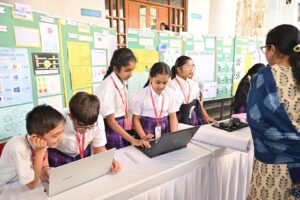
Learning outside the classroom can take many forms. Field visits, projects, workshops, outdoor experiences, clubs, community initiatives, and hands-on activities can all create opportunities for students to connect academic concepts with real situations.
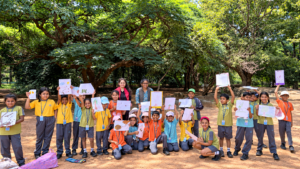
For example, a design project can bring together research, communication, creativity, mathematics, and problem-solving. An outdoor activity can develop teamwork, resilience, and decision-making. A community project can encourage students to understand different perspectives and think about their responsibilities towards others.
The result is learning that is connected rather than compartmentalised.
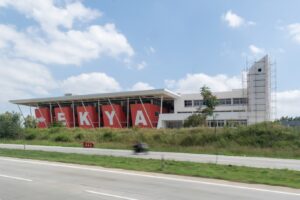
This approach is reflected in Ekya Schools’ broader learning experiences, where the curriculum is complemented by opportunities for exploration, real-world learning, outbound experiences, community engagement, service learning, wellbeing, and work exposure. Ekya Schools – Student Development and Enrichment
Ekya Schools: Connecting Curriculum With Real-World Learning
At Ekya Schools, the learning experience extends beyond conventional academic instruction. The curriculum combines core academic learning with pathways that allow students to explore different ways of thinking and creating.
At Ekya School, these pathways include Design, Making, Information Technology and Society, and Innovation and Entrepreneurship. This gives students opportunities to connect academic concepts with creativity, technology, problem-solving, and practical application.
The approach reflects an important idea: students learn more deeply when they have opportunities to learn, think, and do.
Instead of treating practical experiences as separate from academics, students can use what they learn in different contexts. This helps them understand that knowledge is not confined to a textbook or a particular subject period.
Enrichment and Exploration: Giving Curiosity Space to Grow
Not every important learning experience needs to follow a traditional lesson plan.
Enrichment programmes can give students the freedom to explore interests, experiment with ideas, and discover new areas of learning. At Ekya, enrichment experiences are designed to complement the academic curriculum and support students in developing broader interests and abilities. Ekya Schools (Enrichment)
These experiences can encourage students to explore questions that do not always have a single correct answer. They may involve creative activities, problem-solving, collaboration, technology, communication, or other forms of exploration.
Such opportunities matter because children have different interests, strengths, and ways of expressing themselves. A student may discover confidence through making, performance, sports, technology, community engagement, or creative exploration.
The Making Pathway: From Imagination to Creation
One of the clearest examples of hands-on learning at Ekya School is the Making pathway.
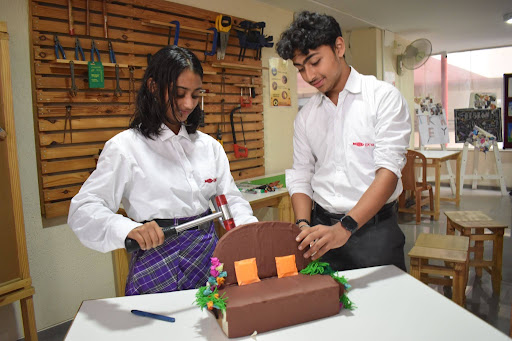
The Makery provides a space where students can explore materials, tools, creative processes, and practical problem-solving. Learning experiences include community challenge solutions, art creation, and real-world product prototypes. Students can engage with techniques and materials such as pottery, ceramics, weaving, woodworking, metalsmithing, laser cutting, and 3D printing.
This kind of experience teaches children something textbooks alone cannot fully communicate: creating requires experimentation.
An idea may not work the first time. A prototype may need to be redesigned. A material may behave differently than expected. Students have to observe, think, communicate, collaborate and try again.
That process can develop creativity, critical thinking, problem-solving, and resilience.
Developing Skills for Life, Not Just School
One of the strongest reasons for learning beyond the classroom is that children eventually encounter situations where there is no textbook answer.
Financial decisions, teamwork, career choices, communication, relationships, problem-solving, and personal responsibilities all require practical judgement.
Real-world learning gives students opportunities to practise these skills in meaningful contexts. They learn how to listen to different viewpoints, divide responsibilities, respond when a plan changes, and understand that mistakes can be part of the learning process.
Most importantly, they begin to develop confidence in their own ability to find solutions.
This broader understanding of learning is increasingly reflected in discussions about education that emphasise practical skills and real-world experiences alongside academic knowledge.
What Parents Should Look for in Schools in Bangalore
When comparing schools in Bangalore, parents can look beyond examination results and consider how a school prepares students for life.
Ask:
- Does the school provide meaningful experiential learning?
- Are students encouraged to ask questions and investigate?
- Can they collaborate and communicate effectively?
- Are there opportunities to create, experiment, and make?
- Does the curriculum connect learning to real-world situations?
- Are creativity, wellbeing, and life skills given importance?
- Can students participate in community engagement and practical experiences?
For families considering international schools in Bangalore, this holistic perspective can be equally valuable. A strong educational environment should provide academic foundations while giving students opportunities to understand how those foundations can be applied beyond the classroom.
Conclusion: Education Does Not Stop at the Classroom Door
The importance of education lies in its ability to prepare children for more than examinations. It should help them become curious learners, thoughtful decision-makers, confident communicators, creative thinkers, and responsible members of society.
The classroom remains an important part of that journey. But it should connect naturally with the world outside it.
At Ekya Schools, curriculum pathways such as Making, along with enrichment, real-world learning, outbound experiences, community engagement, wellbeing, and work exposure, create opportunities for students to learn through experience as well as academic study. Ekya Schools ( Enrichment )
For today’s learners, education should not simply answer the question, “What did you learn?”
It should also inspire them to ask:
What can I create?
What problem can I solve?
How can I contribute?
And ultimately:
How can I use what I have learned to make a difference?
Because the goal of education is not simply to help children learn about the world. It is to give them the knowledge, skills, curiosity, and confidence to participate in it.
Learning may begin in the classroom, but its possibilities should extend far beyond it.