What if the next big business idea came from a classroom?
A student notices a problem in their neighbourhood. Another imagines a better way to reduce waste. Someone else wonders whether technology could make everyday life easier.
These observations may seem small, but they carry the beginnings of something extraordinary.
Turning an idea into a solution takes curiosity, creativity, persistence, and the willingness to learn from experience. It also takes guidance from people who understand what it means to build something from the ground up.
This is where the Young Founders Challenge (YFC) brings a valuable opportunity to school students.
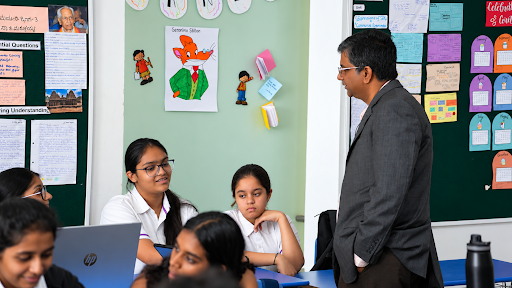
Through real-world problem-solving, entrepreneurial thinking, and interactions with experienced industry professionals, YFC encourages students to explore ideas, challenge assumptions, and discover what it takes to create solutions that matter.
At the heart of this experience is a distinguished jury of ten professionals who bring expertise from entrepreneurship, artificial intelligence, engineering, business strategy, product development, and innovation.
Learning From People Who Have Built, Led, and Innovated
Imagine explaining your business idea to someone who has launched a company, developed innovative products, or led teams working on complex real-world challenges.
What questions might they ask? What possibilities might they help you discover?
For young entrepreneurs, such interactions offer an opportunity to understand how ideas are evaluated beyond the classroom.
The Young Founders Challenge brings together industry professionals who can challenge students to think critically about their ideas, consider customer needs, evaluate feasibility and communicate their solutions effectively.
Their experience helps connect classroom learning with the realities of entrepreneurship, where asking the right questions can be just as important as finding answers.
Meet the 10 Industry Professionals on the Young Founders Challenge Jury
Each jury member brings a distinct perspective, giving young innovators an opportunity to understand the different skills and decisions involved in developing an idea into a viable solution.
1. Bhaskar Singhania: From Ideas to Entrepreneurial Ventures
Founder & CEO, Roobaroo.ai
Bhaskar Singhania brings experience in entrepreneurship, education, product development, and startup mentoring.
His work with founders, educational institutions and innovation ecosystems offers a practical understanding of the journey from identifying a problem to building a business around its solution.
For students, his expertise highlights an essential entrepreneurial question: How do you know whether your idea solves a problem people genuinely face?
His perspective brings attention to customer discovery, business models, market validation, and the importance of communicating ideas with clarity.
2. Apoorva Pandey: Exploring the Future With Artificial Intelligence
AI Strategy Leader, Sears/Transformco; Former Managing Director, Sears India
With experience in artificial intelligence, product strategy, digital transformation and technology leadership, Apoorva Pandey brings an understanding of how emerging technologies are shaping businesses.
As students increasingly encounter AI in their everyday lives, an important question emerges: How can technology be used to solve problems rather than simply make existing tasks faster?
His expertise encourages young innovators to look beyond technological possibilities and consider responsible, practical applications that create value for people.
3. Ankit Bansal: Connecting Innovation With Real-World Needs
Open Innovation Lead, Shell
Ankit Bansal’s experience spans deep technology, financial technology, consumer products, energy technology, and product design.
Innovation often begins with an exciting idea, but its success depends on whether it addresses a genuine need.
His industry perspective brings attention to understanding markets, identifying opportunities, and evaluating the relevance of a proposed solution.
For young founders, this reinforces an important lesson: A strong idea begins with a clear understanding of the problem.
4. Dr. Vijay Tijare: Turning Creative Thinking Into Practical Solutions
Senior Director, Engineering, Dover Corporation
Dr. Vijay Tijare brings expertise in mechanical engineering, product design, the Internet of Things, creativity, and design thinking.
His experience connects technical innovation with practical application.
For students who enjoy designing, building, and experimenting, his expertise highlights the importance of moving beyond an initial concept.
A prototype may not work perfectly the first time. Testing can reveal unexpected challenges, and each refinement can bring a solution closer to becoming functional.
This process of experimentation and improvement lies at the heart of innovation.
5. Sandeep Manepalli Gururaj: Understanding What Makes a Product Valuable
Senior Product Manager, Pegasystems
Sandeep Manepalli Gururaj brings experience in product management, financial services, Agile methodologies, and storytelling.
Building a product involves more than developing features or creating something visually appealing. It requires understanding people, identifying their needs, and responding to feedback.
His expertise offers students a perspective on how products evolve through research, collaboration, and continuous improvement.
It also introduces an important shift in thinking: Instead of asking only what can be built, ask why someone would need it.
6. Sathish Vimalraj: Bringing Product Thinking and Technology Together
Head of Product & Technology
Sathish Vimalraj brings expertise at the intersection of technology and product development.
For students exploring digital solutions, the challenge often lies in connecting an exciting idea with what is technically possible and useful.
His perspective highlights the importance of functionality, usability and bringing different components of a product together.
Young innovators can begin to appreciate how thoughtful design and technical decisions contribute to creating solutions that work in practice.
7. Gagandeep Singh: Understanding the Business Behind an Idea
Vice President, Sales, Angel One
Gagandeep Singh brings experience in sales, business operations, and product-related decision-making.
A great idea needs more than a working product. It also needs a clear explanation of its value and an understanding of the people it is designed to serve.
His experience provides insights into customer relationships, sales strategy, and taking solutions to market.
For students, this introduces an important dimension of entrepreneurship: learning how to communicate why an idea matters.
8. Deepak Jain: Building Strong Connections With Customers
CEO, Wisdom Group
Deepak Jain brings leadership experience and expertise in marketing.
Even the most innovative solutions need to reach the right audience.
His professional perspective highlights how businesses understand customers, communicate their offerings, and distinguish themselves in competitive environments.
For young founders preparing to present their ideas, this brings attention to the power of clear communication and a compelling value proposition.
After all, explaining a solution effectively is an important part of helping others understand its potential.
9. Rajiv Jayaraman: Leadership, Learning, and Entrepreneurship
Founder & CEO, KNOLSKAPE
Rajiv Jayaraman is an entrepreneur with experience in experiential learning, leadership development, and digital transformation.
Through KNOLSKAPE, his work has focused on technology-enabled learning and assessment solutions for organisations.
His experience offers a broader understanding of entrepreneurship, one that extends beyond products and business plans to include people, leadership, collaboration, and continuous learning.
For students, it reinforces the idea that building something new also involves learning to work with others, adapting to challenges, and growing through experience.
10. Pranav Tanna: Building Technology That Solves Problems
Software Engineer II, Walmart Global Tech
Pranav Tanna brings experience in software engineering and early-stage product development.
Developing a technology-based solution requires an understanding of both the problem being addressed and the steps needed to create a working product.
His expertise highlights how technical skills, structured problem-solving, and an understanding of user needs come together in product development.
For young innovators interested in technology, his perspective connects their curiosity about building digital products with the practical thinking involved in making them useful.
What Can Students Gain From Interacting With Industry Professionals?
One of the most valuable aspects of the Young Founders Challenge is the opportunity to connect entrepreneurial learning with perspectives from the professional world.
These interactions can help students develop skills that extend well beyond a competition.
- Learning to ask better questions
Students begin to look beyond their initial ideas and consider the problems they are trying to solve, who might benefit, and what could make their solutions more effective.
- Building confidence in communicating ideas
Explaining an idea to experienced professionals encourages students to organise their thoughts, articulate their reasoning, and respond thoughtfully to questions.
- Understanding the value of feedback
Constructive feedback provides an opportunity to rethink assumptions, identify areas for improvement, and recognise that a first attempt is rarely a final solution.
- Connecting classroom learning with real-world applications
Concepts such as technology, design, mathematics, communication, and problem-solving take on new relevance when students see how they contribute to professional decisions.
- Developing an entrepreneurial mindset
Students begin to understand that entrepreneurship is not simply about starting a business. It involves curiosity, resilience, collaboration, creativity and the willingness to take initiative.
These experiences can help children see themselves not only as learners, but also as individuals capable of developing ideas that contribute to the world around them.
Why the Young Founders Challenge Matters
Children are naturally curious. They notice things adults sometimes overlook, question everyday routines, and imagine different possibilities.
The Young Founders Challenge creates a platform for students to channel that curiosity into purposeful problem-solving.
Whether their interests lie in technology, sustainability, design, social impact, or everyday challenges, the programme encourages students to explore ideas through an entrepreneurial lens.
With exposure to industry perspectives and opportunities to receive professional feedback, students can begin to understand the journey from identifying a problem to developing and presenting a potential solution.
More importantly, the experience encourages them to recognise that their ideas deserve to be explored, tested, questioned, and improved.
Your Idea Could Be the Beginning of Something Bigger
Every entrepreneur begins somewhere.
Every entrepreneur begins somewhere.
Sometimes, it starts with a problem that needs solving. Sometimes, with an observation, a conversation, or a simple question: What if there were a better way?
At Ekya Schools and CMR National PU College, we believe in nurturing curious minds, encouraging independent thinking, and giving students opportunities to turn their ideas into action.
The Young Founders Challenge brings this belief to life, inviting school and pre-university students to explore possibilities, learn from experienced professionals, and discover what they are capable of creating.
Have an idea you want to explore? A problem you would like to solve? Or simply the curiosity to try something new?
Take your first step with the Young Founders Challenge.
Bring your ideas. Learn from industry leaders. Build something of your own.
Because tomorrow’s innovators are already asking today’s most interesting questions.