What can a child learn in a farm field that a textbook may never fully explain?
A Grade 3 student stands in a farm field in Ragihalli village, watching a farmer explain how vegetables are grown. An hour later, she is rolling peanut laddus in a village bakery alongside the people who make them every day.
She will likely remember that afternoon for years.
It taught her about food, work, community and effort in a way that goes beyond a textbook.
We often think of education as what happens inside a classroom: lessons, homework, assessments and grades. Academic success matters, but marks alone do not shape a child’s future. Confidence, empathy, resilience, creativity and leadership are developed through experiences that allow children to explore, participate and take responsibility.
This is where extracurricular activities play an important role.
From sports and performing arts to clubs, leadership opportunities and field trips, extracurricular activities for students create spaces where children can discover their strengths, build important life skills and connect learning with the world around them.
In this blog, we explore the importance of extracurricular activities in student development and how Ekya Schools creates meaningful learning experiences beyond the classroom.
What Are Extracurricular Activities?
Extracurricular activities are experiences that take place alongside the core academic curriculum. They give students opportunities to explore their interests, discover their strengths and apply what they learn in different contexts.
Some common extracurricular activities in school include:
- Sports and physical education such as football, basketball, athletics, swimming and yoga
- Performing and visual arts such as music, dance, theatre, painting and craft
- Clubs such as robotics, coding, debate, Model United Nations and science clubs
- Community service and social initiatives
- Leadership opportunities such as student council, event organisation and team captaincy
- Experiential learning through visits to museums, research institutes, galleries, farms and community spaces
The most meaningful extracurricular activities for students are not simply additions to learning. They are spaces where children practise skills they will carry into life.
Why Are Extracurricular Activities Important for Students?
1. Developing Essential Life Skills
Textbooks help students build knowledge, while extracurricular activities give them opportunities to practise important life skills.
Students who balance classes, homework and activities gradually learn time management and prioritisation.
Participating in a debate or performing on stage develops communication skills. Team sports and group projects encourage collaboration, decision-making and problem-solving.
Learning an instrument, preparing for a performance or training for a match can also develop discipline, patience and perseverance.
These are skills that grow through practice and experience.
2. Supporting Academic Learning
Many parents wonder whether extracurricular activities in school take time away from academics. When thoughtfully planned, these experiences can actually deepen learning.
Physical activity can support concentration and help students return to academic tasks with greater energy. Art, music and theatre encourage imagination and creative thinking. Remembering choreography, scripts or game strategies can strengthen focus and memory.
Experiential activities also help students see classroom concepts in real settings.
Science at a research institute, history in an art gallery or sustainability on a farm can make abstract ideas easier to understand and remember.
Learning becomes richer when students can connect what they study with what they experience.
3. Building Confidence and Self-Expression
Confidence often grows through small moments.
A student asks a question in front of an expert.
Another performs on stage for the first time.
Someone scores their first goal or presents an idea to a group.
Each experience gives children a chance to discover what they are capable of.
For some students, extracurricular activities become the place where they first find their voice.
That confidence can gradually influence how they participate in class, communicate with others and approach unfamiliar situations.
4. Fostering Teamwork, Social Skills and Empathy
Extracurricular activities for students often bring children together around shared interests and goals.
Working as part of a sports team, performance group, club or community initiative teaches students how to listen, communicate, share responsibility and work through differences.
They also meet people with different perspectives and experiences.
Through these interactions, students learn that collaboration involves patience, respect and understanding.
Community experiences can further encourage them to listen to others, understand different ways of life and develop empathy.
5. Promoting Leadership and Responsibility
Leadership is not only about holding a title.
It develops when students are trusted with responsibility.
Captaining a team, organising an event, leading a club activity or representing a class gives students opportunities to make decisions, support their peers and take ownership of outcomes.
They learn that leadership also means listening, being fair, encouraging others and responding thoughtfully when things do not go as planned.
This is one of the reasons extracurricular activities in school are valuable. They give students opportunities to practise responsibility in real situations.
6. Supporting Emotional Well-Being
Children today navigate academics, friendships, expectations and changing social environments.
Extracurricular activities can provide healthy spaces for expression and connection.
Physical activity encourages movement and energy. Art, music and performance offer creative ways for students to express thoughts and emotions. Being part of a team or club can also create a sense of belonging.
When students have opportunities to pursue activities they enjoy, school can become a place where they experience achievement, friendship and personal growth in different ways.
7. Helping Students Discover Their Interests
Children do not always know what they enjoy until they have the opportunity to try something new.
A robotics session may spark an interest in engineering.
A theatre visit may encourage a love for performance.
A day spent learning about agriculture may create curiosity about sustainability.
Exposure to varied extracurricular activities for students gives children the freedom to explore interests without needing to immediately decide where those interests will lead.
Over time, these experiences help them understand themselves better and begin to recognise the fields, ideas and activities that genuinely excite them.
How Ekya Schools Brings Learning to Life Beyond the Classroom
At Ekya Schools, learning is designed to move beyond the classroom.
As a Bangalore school that focuses on holistic development, Ekya encourages students to observe, ask questions, experiment, interact with people and reflect on what they experience.
The Student Development programme supports this approach, with experiential field trips forming an important part of how students connect academic concepts with the world around them.
For families looking for a k12 school in bangalore, these experiences show how learning can extend beyond lessons and assessments into meaningful real-world engagement.
Rather than treating field trips as occasional outings, Ekya focuses on creating purposeful learning experiences.
Learning Across Campuses, Grades and Disciplines
Between July and September 2026, Ekya students participated in 23 field trips and experiential programmes across seven campuses.
More than 1,500 students, from the Early Years to Grade 12, explored over 10 locations connected to science and technology, arts and culture, performing arts, sustainability, textiles and innovation.
Each experience offered students a different way to explore ideas beyond the classroom.
Arts, Culture and Performing Arts
Visits to the Rizwan Razack Museum, Ranga Shankara, the MAP Comic Exhibition and the National Gallery of Modern Art gave students opportunities to encounter art, history and performance directly.
At the National Gallery of Modern Art, students explored representations of mothers and children across different periods.
The experience encouraged them to observe how artworks can communicate ideas about society, relationships and everyday life.
As Anjali W from Ekya BTM shared:
“The field trip helped students connect their classroom learning with history, culture and art. They were also able to observe how artworks can reflect society.”
Science, Technology and Innovation
Visits to IIIT introduced students to science, technology and artificial intelligence in a real-world research environment.
Students were able to see how concepts discussed in classrooms connect with ongoing research and innovation.
Such experiences encourage students to ask questions, observe carefully and recognise that science is not limited to textbooks or laboratories in school.
It is continuously developing around them.
Textiles, Industry and Traditional Knowledge
At the CSTRI Silk Institute, students explored the journey of silk and learned about the connections between materials, industry and traditional knowledge.
The visit helped students understand how everyday products are connected to larger systems of production, craftsmanship and cultural heritage.
Sustainability and the SDGs
Through the UAS SDG Explorers programme at the University of Agricultural Sciences, Bengaluru, students explored Responsible Consumption and Production, which is Sustainable Development Goal 12.
They learned about apiculture, sericulture, millet-based learning, soil health and food security.
Students were introduced to these ideas before the visit so that they could better understand the agricultural practices they observed.
K Renuka Devi from Ekya ITPL noted that this preparation helped students understand why these practices matter within agriculture.
Communities and Nature
Experiences such as the Ragihalli Village visit, Bangalore Creative Circus and the NCBS Naturalist Walk connected students with local communities, biodiversity and natural ecosystems.
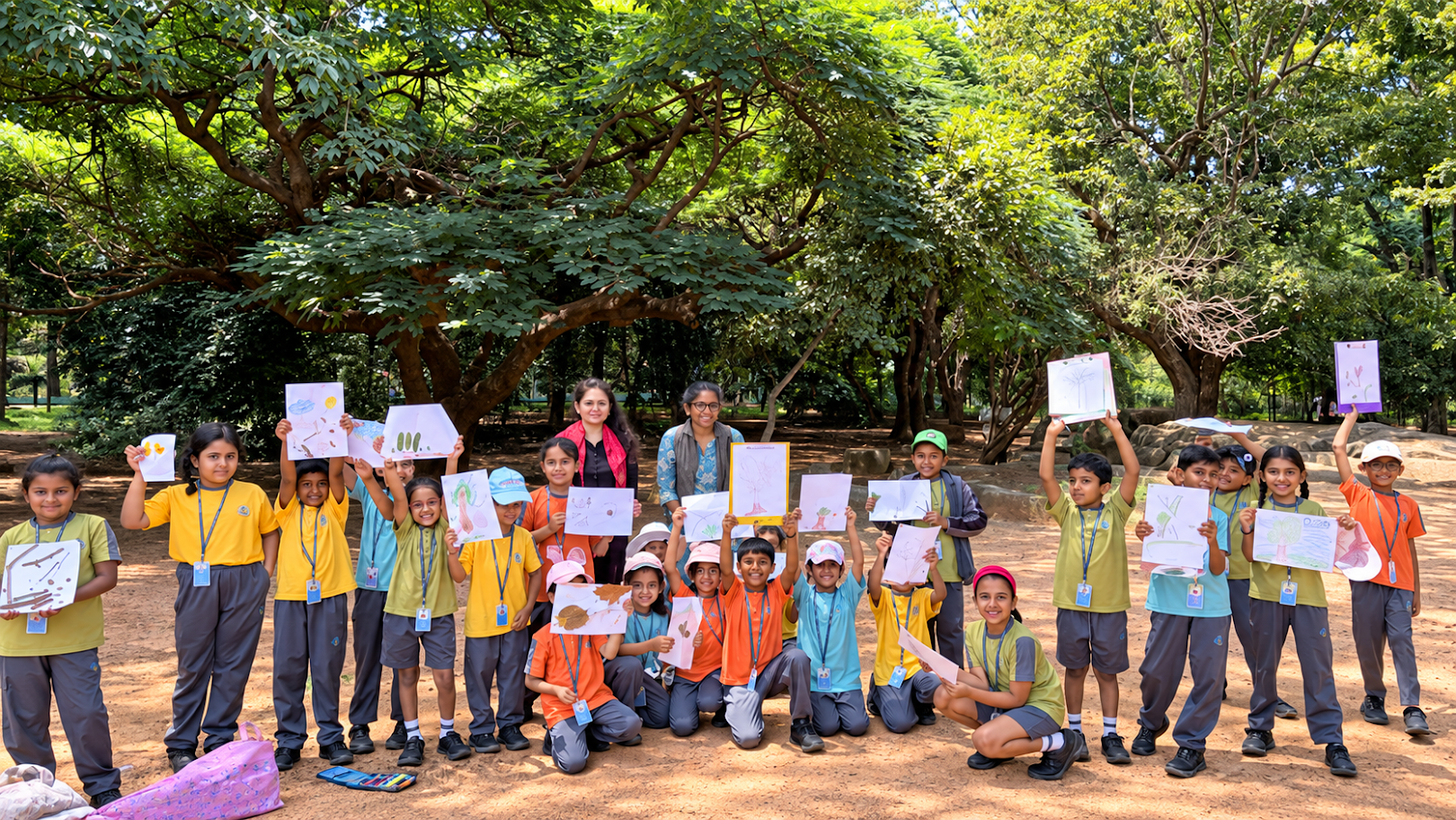
During the Ragihalli Village visit, students observed farmland, learned how vegetables are grown and gained a closer understanding of village life.
Sarah Swarna Latha from Ekya BTM shared:
“Students had a great time on this field trip. They explored farm land and saw how vegetables are grown and also understood the challenges farmers face and how people in the village live.”
Experiences like these show how extracurricular activities can help students see the people, systems and environments behind many things they encounter every day.
A Purposeful Three-Step Approach
What turns a field trip into a meaningful learning experience is what happens before, during and after the visit.
At Ekya, field trips follow a three-step approach.
Before the Visit
Teachers and CCA Coordinators introduce students to the venue and connect the upcoming experience with relevant curriculum concepts.
Students may also discuss questions they want to explore during the visit.
During the Visit
Students observe, interact with experts, participate in hands-on activities and document parts of their learning through photographs and student-led vlogs.
They are encouraged to remain curious and ask questions.
After the Visit
Students reflect on what they observed, document key learnings and identify new questions that emerged from the experience.
Reflection helps students move from simply remembering an outing to making deeper connections.
After the Bangalore Creative Circus visit, Santha Manisha from Ekya ITPL reflected:
“The interactive and experiential approach made learning more meaningful and enjoyable. It would be beneficial to have more such field trips that provide students with opportunities to explore real-world applications of classroom concepts.”
Tips for Parents: Supporting Your Child’s Extracurricular Journey
Parents can play an important role in helping children benefit from extracurricular activities for students.
Let them explore
Encourage your child to try different activities before deciding what they enjoy most. Variety can help genuine interests emerge naturally.
Maintain a healthy balance
Activities should add curiosity and joy to a child’s life rather than create additional pressure. Make space for academics, rest, play and family time.
Celebrate effort
Recognise persistence, curiosity and improvement, not only wins, awards or final outcomes.
Talk about their experiences
After an activity or field trip, ask questions such as:
What surprised you?
What did you enjoy?
What was difficult?
What would you like to learn more about?
These conversations encourage reflection.
Stay connected with teachers
Teachers often notice interests and strengths that may not always be visible at home. Conversations between families and educators can help students make thoughtful choices about the opportunities available to them.
Conclusion
Why do extracurricular activities matter in student development?
Because education is about more than what a child knows.
It is also about how they communicate, collaborate, solve problems, express themselves, respond to challenges and understand the world around them.
Meaningful extracurricular activities in school give students the space to develop confidence, leadership, empathy, creativity and resilience through experience.
At Ekya Schools, learning does not stop at the classroom door.
Whether students are on a sports field, performing on stage, participating in a club, exploring a museum, visiting a research institute or speaking with members of a village community, they are encouraged to observe, explore, question, connect, create and reflect.
For parents exploring a k12 school in Bangalore, looking at the quality of experiences beyond academics can offer valuable insight into how a school supports the development of the whole child.
The lessons children experience beyond the classroom often stay with them long after the activity itself is over.
Explore Learning Beyond the Classroom at Ekya Schools
At Ekya Schools, learning continues through experiences that encourage children to question, create, collaborate and explore the world around them.
Come experience our approach to holistic education and see how we support every learner’s growth.